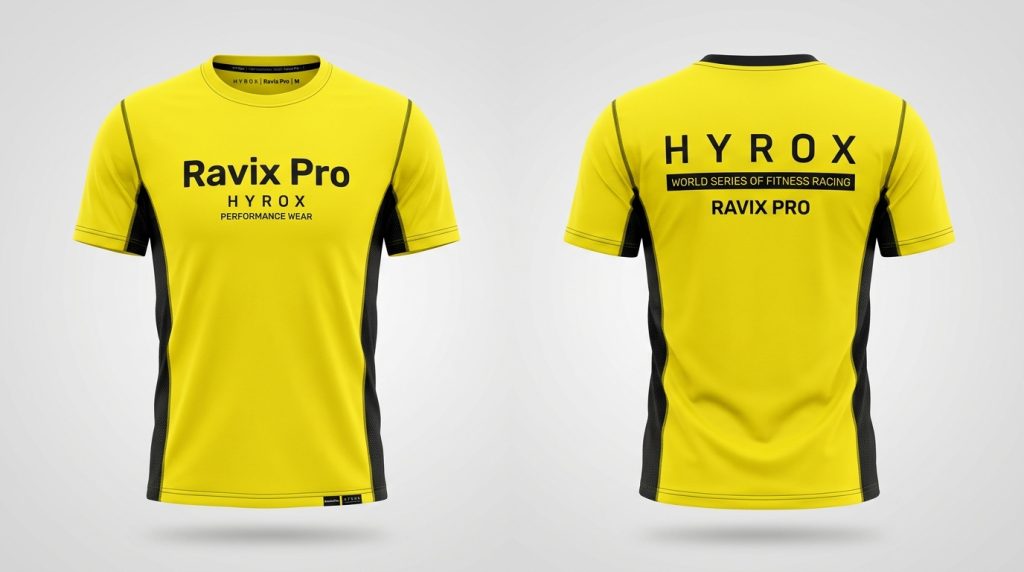
Quick answer: Moisture-wicking fabrics, usually polyester or polyester-spandex knits, pull sweat away from the skin to the surface where it dries quickly, keeping athletes cooler and lighter.
Sweat is the enemy of comfort in sportswear. A training top that stays soaked, clings and gets heavy will never earn a repeat purchase, no matter how good the logo looks. Moisture-wicking, quick-dry and breathable fabrics solve this, and they are now expected in gym wear, running gear and team uniforms. This guide explains how moisture-wicking fabric works, what “Dri-FIT-style” really means, which fibres and knits perform best, and how to specify and test them.
Quick answer
Moisture-wicking fabric pulls sweat away from the skin by capillary action and spreads it across the outer surface, where it evaporates quickly. It is usually polyester or nylon, sometimes with spandex, in a knit structure or with a finish that boosts wicking. “Dri-FIT” is Nike’s trademark; factories make similar performance fabrics, often called “dri-fit style” or “cool-dry” polyester. For breathability, add mesh panels or open knits; for quick drying, choose lightweight polyester (about 120–180 GSM).
Performance fabrics that keep athletes dry. Ravix Pro Industry is a sportswear manufacturer in Sialkot, Pakistan, serving sports clubs and clothing brands: moisture-wicking, quick-dry and breathable polyester and nylon fabrics for team uniforms, gym wear and running gear, tested before bulk. MOQ 30 pieces per design. Gym wear · Team uniforms · Get a free quote.
Part of our guide: Fabrics for Sportswear and Clothing · Quick answers
How moisture-wicking fabric works
- Absorb at the skin: fine synthetic fibres and channels pull liquid sweat away from the body.
- Move outward: capillary action draws moisture through the fabric toward the outer face.
- Spread and evaporate: moisture spreads over a large surface area and dries quickly.
Cotton works the opposite way: it absorbs and holds water, which is why a cotton tee feels heavy and cold when you sweat.
Wicking, quick-dry and breathable: the difference
| Property | What it means | How it is achieved |
|---|---|---|
| Moisture-wicking | Moves sweat away from the skin | Synthetic fibres, channelled yarns, wicking finishes, two-layer knits |
| Quick-dry | Dries fast once wet | Low-absorbency fibres, lighter GSM, open structures |
| Breathable | Lets air and vapour pass through | Mesh, eyelet and open knits, laser perforation, ventilation panels |
Best fabrics for moisture-wicking sportswear
| Fabric | Typical GSM | Best for |
|---|---|---|
| Polyester interlock (“dri-fit style”) | 130–180 | Team jerseys, training tees, sublimated designs |
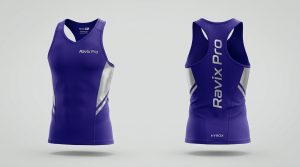
| Micro mesh / bird’s-eye mesh | 110–150 | Match jerseys, side panels, running singlets |
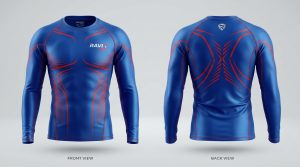
| Polyester / spandex | 160–240 | Compression and fitted training tops |
| Nylon / spandex | 200–300 | Leggings, sports bras, premium gym wear |
| Recycled polyester | 120–180 | Sustainable performance collections |
| Polyester / cotton-feel blends | 150–200 | Lifestyle training tees with a softer hand |
Design tips for drier, cooler garments
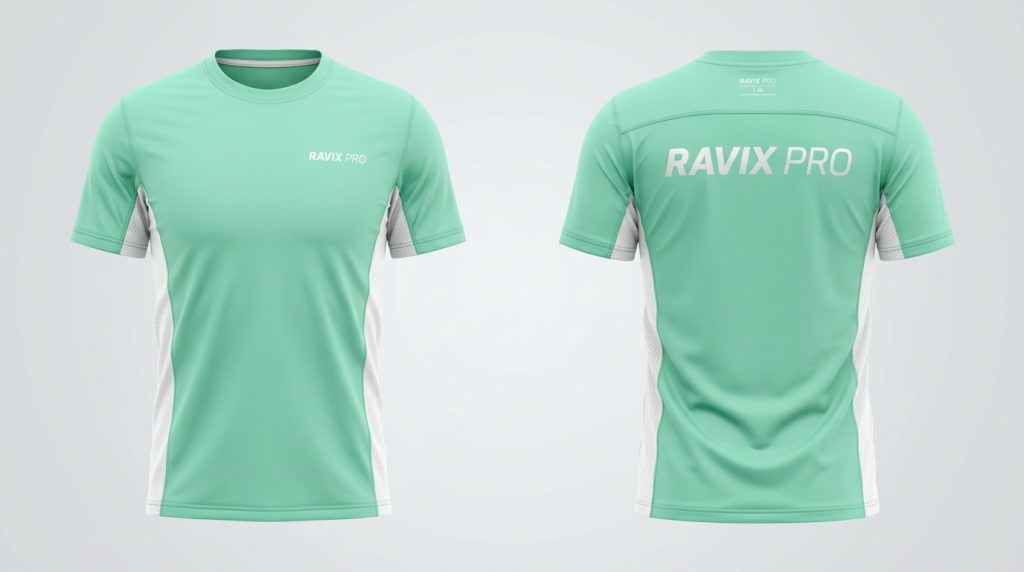
- Place mesh panels at the back, underarms and sides, where heat builds up.
- Use flatlock seams to reduce chafing on wet skin.
- Choose lighter GSM for hot-weather sports; heavier for cool-weather training.
- Consider anti-odour finishes for gym wear, since polyester can hold odour.
- Use sublimation for graphics: it keeps the fabric breathable, unlike heavy plastisol prints.
How to test moisture management
| Test | What it shows |
|---|---|
| Drop test | A water drop should spread and disappear quickly on the inside face |
| Wicking (vertical strip) test | How far water travels up a fabric strip in a set time |
| Drying time test | How fast a wetted sample returns to dry weight |
| Lab methods | For example AATCC 195 (liquid moisture management) and AATCC 197 (vertical wicking) |
| Wash durability | Repeat tests after several washes, as some finishes wash out |
From our factory floor in Sialkot
Ravix Pro Industry has manufactured performance sportswear since 2008. For every new wicking fabric we run a simple drop test and a wash test before bulk, because some wicking finishes perform well when new but fade after a few washes. When a buyer needs lab data, we arrange tests to the methods they specify. For team jerseys, our most-requested combination is a polyester interlock body with micro-mesh side panels, fully sublimated. See our quality assurance.
Need performance fabrics for your range? Request a free quote or message us on WhatsApp and we will suggest fabrics for your sport and climate. MOQ from 30 pieces per design.
FAQs
What is the best moisture-wicking fabric?
Polyester and nylon performance knits, often blended with spandex, are the most effective and durable moisture-wicking fabrics.
Is Dri-FIT a type of fabric?
Dri-FIT is Nike’s trademark for its moisture-wicking polyester. Manufacturers produce similar performance polyester, usually described as “dri-fit style” or “cool-dry” fabric.
Is cotton moisture-wicking?
No. Cotton absorbs and holds moisture, so it is not ideal for intense exercise.
Does sublimation affect breathability?
No. Sublimation ink goes into the fibres, so the fabric stays breathable and light.
Do wicking finishes wash out?
Some topical finishes can weaken over many washes; fabrics with wicking built into the yarn or knit structure last longer.
Related guides: gym wear manufacturer in Pakistan, what is GSM in fabric, how soccer jerseys are made, custom leggings manufacturer.
Sources
- AATCC: Test methods (including TM195 and TM197)
- Ravix Pro Industry fabric testing records, 2008–2026.