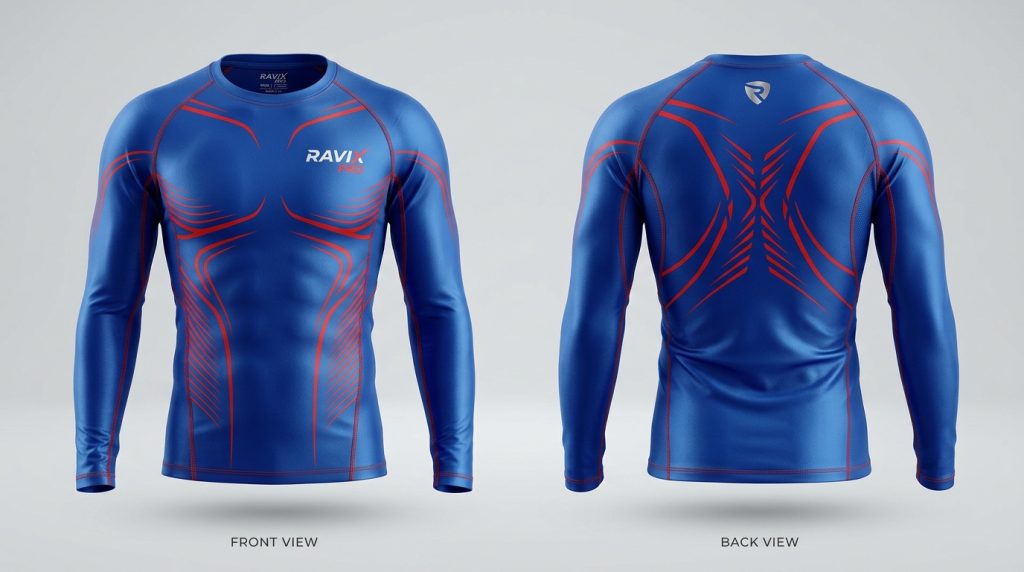
Quick answer: Sportswear is made by sourcing fabric, cutting panels, sewing with specialised machines, adding prints or embroidery, then inspecting, ironing and packing each piece.
Behind every jersey, legging and hoodie is a chain of specialised machines and skilled people. This factory guide takes you inside a sportswear production floor to show how sportswear is made, from yarn and fabric to the finished, packed garment, and why each step matters for quality.
Quick answer
Sportswear is made by knitting performance fabric (usually polyester, nylon or cotton blends with spandex), cutting it into pattern pieces, decorating it by sublimation, printing or embroidery, sewing it with stretch seams such as overlock and flatlock, then finishing, inspecting and packing each garment.
Building a clothing or sportswear brand? Ravix Pro Industry is a sportswear and apparel manufacturer in Sialkot, Pakistan, offering OEM and private label manufacturing for clothing brands: product development, samples, custom labels and packaging, and consistent bulk production, certified WRAP, BSCI, OEKO-TEX and ISO 9001. MOQ 30 pieces per design. Private label · OEM manufacturing · Get a free quote.
Part of our guide: Clothing Manufacturing Lead Times: Sample to Delivery · Quick answers
1. Yarn and fabric
Most sportswear is made from knitted fabric because knits stretch and recover with the body. Common fibres:
| Fibre | Why it is used | Typical products |
|---|---|---|
| Polyester | Light, quick-dry, durable, takes sublimation | Team jerseys, running tops |
| Nylon | Smooth, strong, soft handfeel | Leggings, sports bras |
| Spandex (elastane) | Stretch and recovery | Compression, activewear |
| Cotton and cotton-poly | Comfort, breathability, print-friendly | Hoodies, tees, joggers |
Knit structures matter too: mesh for ventilation, interlock for a smooth printable surface, jersey for tees, fleece and French terry for warmth. Fabric weight is measured in GSM; see what is GSM.
2. Fabric inspection and relaxing
Before cutting, rolls are checked for holes, shade differences and defects. Stretch fabrics are often left to “relax” so they do not shrink after cutting.
3. Pattern making and grading
A pattern is created for the base size, then graded up and down for every size. Patterns are arranged in a marker to use fabric efficiently.
4. Cutting
Fabric is spread in many layers and cut with a straight-knife cutter, or in some factories by automated cutting tables. Each bundle is numbered by size and layer so colours match within each garment.
5. Decoration
Sublimation
Designs are printed in reverse on transfer paper with sublimation inks, then pressed onto white or light polyester with a heat press or calender at high temperature. The ink turns into gas and bonds into the fibres, so the print has no feel and never cracks.
Screen printing and puff print
Ink is pushed through mesh screens, one colour at a time, then cured in a dryer. Puff ink expands with heat for a raised effect.
Embroidery
Computerised multi-head embroidery machines stitch logos from a digitised file. Patches and chenille letters are made separately and stitched on.
Heat transfer and DTF
Designs printed on film are pressed onto the garment, ideal for names, numbers and detailed artwork.
6. Sewing
| Machine | Use in sportswear |
|---|---|
| Overlock | Joins and finishes knit seams with stretch |
| Flatlock | Flat, comfortable seams for compression and activewear |
| Coverstitch | Stretchy hems on sleeves and bottoms |
| Single and double needle | Pockets, plackets, topstitching |
| Bar-tack | Reinforcing stress points |
Waistbands, ribs, zips and drawcords are added at this stage. For fight gear such as MMA shorts, extra reinforcement goes into the crotch and side slits; see custom MMA shorts and rash guards.
7. Finishing
Threads are trimmed, garments pressed, labels and hang tags attached. Some products, such as heavyweight tees and hoodies, may be garment-washed for a softer, vintage look; see vintage wash explained.
8. Inspection and packing
Each piece is checked for measurements, seams, print and colour, then folded, polybagged and packed into cartons. Read the quality control guide and the full manufacturing process from design to shipment.
Want the jersey-specific version? See how soccer jerseys are made.
For cotton tees, see how t-shirts are made.
From our factory floor in Sialkot
At Ravix Pro Industry we have manufactured sportswear since 2008. Every order follows the same 11 steps: quote, design, approval, sample, cutting, decoration, stitching, thread trimming, quality check, packing and door-to-door shipping. Sublimation, screen printing, embroidery and stitching happen in-house, so we control colour, print quality and timing ourselves. The most common problem we see with first-time buyers is skipping the sample; a physical sample costs a little extra but prevents expensive surprises in bulk. See our manufacturing process and quality checks.
Ready to start? Request a free quote or message us on WhatsApp with your design, quantity and sizes. MOQ from 30 pieces per design. We reply within 24 hours.
FAQs
What fabric is most sportswear made from?
Mostly knitted polyester, nylon and spandex blends, plus cotton and cotton-poly for hoodies and tees.
What is flatlock stitching?
A flat, stretchy seam that does not rub the skin, used on compression wear and activewear.
Is sublimation better than printing?
For polyester performance wear, sublimation gives unlimited colours and never cracks. For cotton, screen printing is usually better.
How long does it take to make sportswear?
Bulk production usually takes a few weeks after sample approval, depending on quantity and decoration.